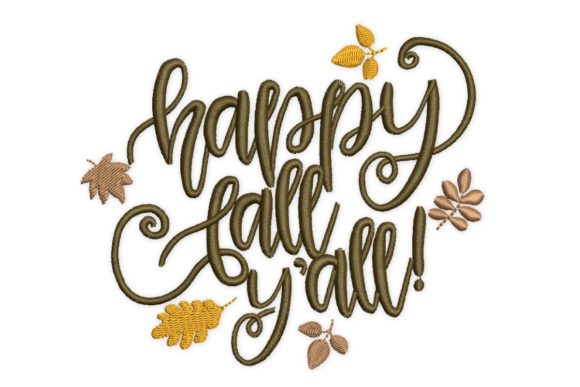
Happy Fall Embroidery Design Review for Boutique Apparel
As an embroidery designer who builds small seasonal collections for online boutiques, I’m always on the lookout for machine embroidery designs that feel effortless to stitch but carry enough personality to become a core piece in a sweatshirt or hoodie drop. When I saw Happy Fall on Creative Fabrica, I immediately pictured it on a warm cream crewneck with soft blush thread and maybe a tiny accent on the sleeve. The product description says it’s a high-quality embroidery design that is fun and easy to stitch, and that it will look elegant and gorgeous when stitched onto any fabric. This machine embroidery design comes with multiple embro – and that open-ended note tells me to check the file details carefully later, but the promise of elegance already had me interested.
Planning an autumn capsule for a small clothing brand or an Etsy seller means every design has to do double duty. It needs to look premium in a flat-lay product photo, charm buyers in a lifestyle shot, and stitch reliably on fabric that might have a little stretch or texture. My first impression of Happy Fall is that it lands somewhere between playful rustic and clean feminine. It doesn’t feel overly bold or graphic-heavy, which makes it flexible for both minimalist boutique pieces and cozy, layered outfits. The mood is inviting, not loud – the kind of decorative embroidery that adds perceived value to custom apparel without overwhelming the garment.
First Impression: Visual Personality and Stitching Mood
From the preview and what I know of similar Creative Fabrica embroidery files, Happy Fall reads as charming and approachable. There’s a sense of movement in the lettering or the accents – the kind of detail that photographs beautifully on textured fabric and catches light without heavy stitch density. I’d describe the visual personality as casual refinement. It’s not a rustic burlap-and-pumpkin motif, nor is it ultra-modern thin typography. It sits in a sweet spot: elevated enough for a boutique brand, simple enough for a beginner or intermediate stitcher.
The decorative strength really depends on thread color choices. On a tone-on-tone neutral sweatshirt, the design would whisper. With a metallic or a warm terracotta thread on a dark garment, it becomes a statement. That versatility is something I value – it lets me use one embroidery file for multiple apparel items and still keep each piece feeling distinct.
Where Happy Fall Shines on Apparel
I started mentally placing Happy Fall on the garments my customers love most: oversized sweatshirts, hoodies, soft t-shirts, denim jackets, and canvas tote bags. Here’s how I think it performs in each role.
Sweatshirt Embroidery: The Classic Canvas
A relaxed-fit crewneck in a neutral oatmeal or dusty mauve feels like the ideal match. Chest placement on a sweatshirt is often the first thing I test. Happy Fall seems like it would sit beautifully around 2.5 to 3.5 inches wide, centered or slightly to one side. The stitch density, once I’ve verified the file, should be balanced enough that fleece doesn’t get swallowed or puckered. I’d use a medium-weight cutaway stabilizer to keep the fabric feed smooth and prevent any shifting during the run.
For boutique customer photos, a sweatshirt embroidery like this creates an immediate seasonal vibe without screaming “fall decoration.” It feels like a piece someone would reach for every crisp morning, which is exactly the kind of product that builds repeat buyers.
Hoodie Chest Placement and Front-Pocket Accents
Hoodies add a curve challenge. The center seam and the front pocket break the flat surface. I’d test Happy Fall both above the pocket and on the left chest. On pullover hoodies with a front pouch, placing the design above the pocket keeps the hoodie design visible and avoids the tricky curved surface of the pocket itself. The description mentions elegance, and I think that translates well to a subtle chest accent that doesn’t stretch across that bulky seam.
Sleeve Accents and Back Designs
For a more modern streetwear or boutique silhouette, a sleeve embroidery placement can turn a simple sweatshirt into a piece that feels curated. The scale of Happy Fall would need to be adjusted if the file includes multiple sizes, so confirming hoop size compatibility is key. A small sleeve accent in matching or contrast thread gives a high-end custom look. For a back design, I’d scale up if the file supports it, anchoring the piece across the shoulders on a denim jacket or a structured utility tote bag. The embroidery file would need to maintain clarity at larger sizes, so I’d run a test on scrap fabric first.
Tote Bag Design and Everyday Accessories
Beyond clothing, a handmade product like a canvas tote with Happy Fall stitched in a warm ochre thread becomes a seller. It’s the kind of item that works for craft fairs, Etsy listings, and social media graphics. Because the design is described as elegant, it won’t feel juvenile on a grocery tote; instead, it elevates the tote into a gift-worthy product.
Careful Application: What to Watch Before Stitching
Even the smoothest-looking preview deserves a critical eye. I’ve learned to examine a few areas closely before committing to production runs, especially for commercial embroidery products.
Small Chest Placement on Stretchy or Ribbed Fabrics
If Happy Fall includes any tiny lettering or delicate internal elements, chest placement on a ribbed t-shirt or a thin jersey could lead to distortion. I’d use a fusible mesh stabilizer or a no-show mesh for lightweight garments to prevent the design from sinking into the fabric texture. Dark garments, while dramatic, can make dense stitch areas appear less defined if the contrast thread isn’t spot-on. I’d test on a similar scrap in the actual garment color to check visibility and adjust thread colors accordingly.
Dense Stitch Areas and Fabric Behavior
Stitch density matters enormously for fleece and curved surfaces. Too dense, and the design becomes stiff; too light, and the fabric shows through. The product description doesn’t list the stitch count, so I’ll need to open the embroidery file in my software and review the density at true size. I’ll also pay attention to areas that might wrinkle or pucker during wear – any part that falls over a seam or a shoulder curve. Testing on a similar-weight garment is non-negotiable, especially before offering the design on finished items in my small shop.
How Happy Fall Elevates Boutique Brand Identity
One embroidery design can shift the entire feeling of a collection. Happy Fall has the potential to increase perceived apparel value in a few subtle but powerful ways. First, it brings visual consistency to a seasonal drop. When customers see a cohesive mood across a few pieces, buyer trust goes up. They’re more likely to save the shop, share the product photo, or follow along for the next release.
From a product recognition standpoint, a distinctive yet elegant phrase or motif can become a signature. I could see this design becoming the anchor piece that people associate with a particular boutique brand’s autumn line. That kind of customer engagement is worth far more than a one-off sale. The embroidery file itself – a digital embroidery file from Creative Fabrica – becomes a reusable asset across multiple products if the commercial license permits, so I’d check the licensing details carefully before listing any finished product.
Practical Embroidery Designer Notes for a Smooth Workflow
Whenever I pull a new machine embroidery design into my workflow, I follow the same steps to avoid surprises and keep production clean. Here’s the checklist I’d run through with Happy Fall:
- Test on scrap fabric first. Match the weight and fiber content of the final garment as closely as possible.
- Check stabilizer choice. For sweatshirt embroidery, I prefer a cutaway stabilizer; for thin tees, a no-show mesh or fusible.
- Review thread color contrast. On dark apparel, a slightly warmer or lighter tone can make the design pop better than a pure bright.
- Confirm hoop size. Without the file specs, I’ll open it in software to verify it fits the hoops I use for chest placements.
- Inspect stitch density. Zoom in on any small lettering or delicate details to ensure they won’t be lost on textured fabric.
- Test on a similar garment curve. If I plan sleeve placement, I’ll pin the test fabric to a sleeve form or a curved surface to check distortion.
- Compare placement options. I’ll mark three positions on a sample garment – chest, sleeve, and upper back – and stitch one of each to photograph for product listings.
- Verify Creative Fabrica product details and licensing. The description says this design comes with multiple embro – I need to know exactly which formats, hoop sizes, and any usage terms before selling finished apparel.
Taking these steps transforms a digital embroidery file into a reliable production asset. It also protects the quality that an Etsy seller or small shop product depends on for reviews and return customers.
Translating Happy Fall into Product Photography and Mockups
Great product photos sell the embroidery before the customer ever holds the garment. I’d photograph Happy Fall on a neutral sweatshirt against seasonal props – maybe a wool throw, a mug, some dried foliage – to create a lifestyle scene that feels warm and inviting. For Etsy listings, a clean flat lay with the design centered and the thread color detail visible in natural light works well. A printable mockup can help too, but nothing beats a real stitched sample to show texture and scale.
Social media graphics benefit from showing the design in real wear, not just on a hanger. I’d grab a short video clip of the finished product moving in natural light. The elegance mentioned in the description should show in the way the thread catches light and the fabric drapes. That kind of content makes a boutique brand feel established, even if the collection is only three or four pieces.
Why This Design Feels Like a Smart Addition to an Autumn Line
There’s a quiet confidence to Happy Fall. It doesn’t rely on heavy seasonal clichés. Instead, it lets the stitcher shape the mood with thread color and placement. For a boutique owner who wants their custom apparel to feel intentional rather than gimmicky, that’s a significant advantage. Whether it’s on a cozy hoodie, a soft oversized tee, or a canvas tote that becomes part of someone’s weekend routine, the design carries a warmth that fits naturally into fall and beyond.
I’ll be pulling this file into my embroidery software soon, checking every detail, and testing it on a few garment weights. If the stitch quality matches the preview’s promise, it will likely earn a permanent spot in my autumn rotation – the kind of design that quietly boosts product recognition and keeps customers coming back for that feel-good detail they can’t find in mass-market clothing.
For any embroidery shop, handmade business owner, or creative entrepreneur browsing Creative Fabrica for fresh seasonal ideas, Happy Fall is worth a close look. Do your due diligence on the file specifics, run your tests, and then let the design do what elegant embroidery does best: make an everyday garment feel like a small treasure.