H Girl Teddy Embroidery Review: Branded Merch & Patches
When you run a small business—whether it’s a cozy bookstore, a bustling bakery, or a handmade craft studio—every visual detail needs to work hard for your brand. Embroidery can be one of the most powerful tools to build that recognizable, trusted, professional image. As an embroidery designer who regularly tests files for small business merchandise, I’m always on the lookout for designs that balance speed, charm, and versatility. Today I’m taking a close, practical look at H Girl Teddy from an alphabet set, evaluating how it performs as a branded patch, apparel accent, and merch staple. This isn’t just a pretty sketch—it’s a vehicle for your business identity.
First Impressions of H Girl Teddy
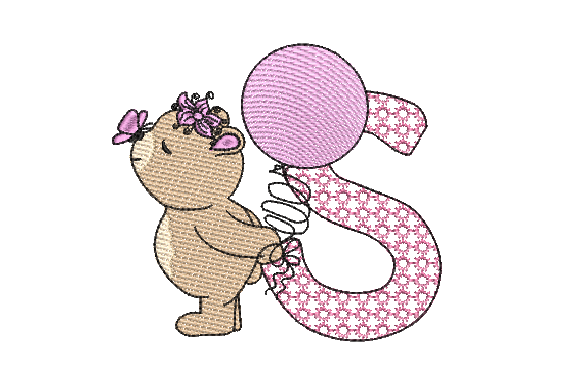
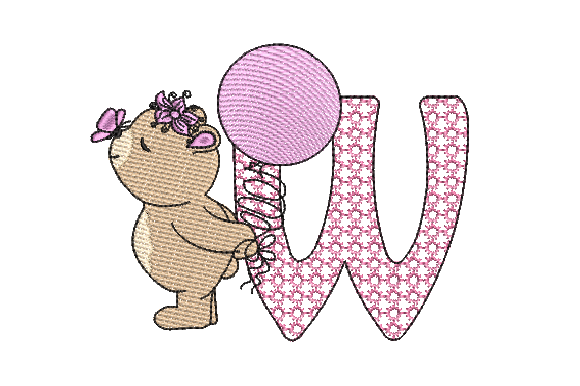
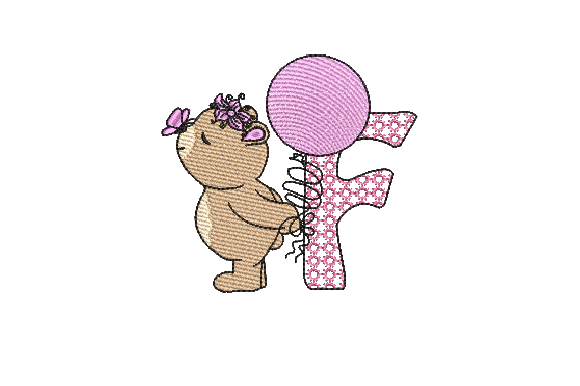
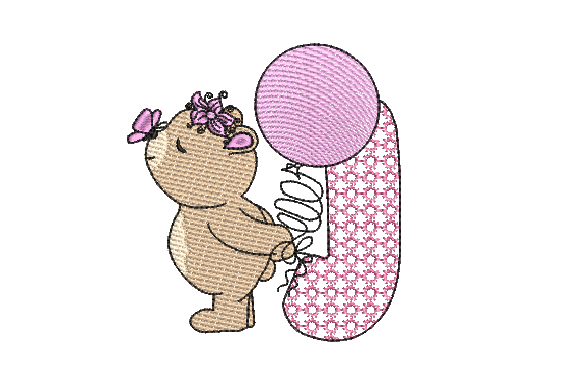
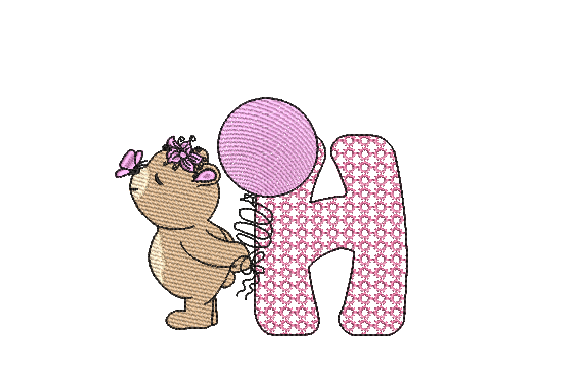
Right away, the hand-drawn personality of H Girl Teddy stands out. The description notes it’s designed to look like a sketch, with light fill and little to no underlay. That approach gives the embroidery file an airy, artistic texture that feels both premium and approachable. The teddy bear character integrated with the letter H suggests a soft, friendly, almost nostalgic quality—ideal for businesses that want to communicate warmth and a human touch. Instead of a dense, stiff emblem, you get a design that breathes. For a café, a children’s boutique, a florist, or a pet brand, that aesthetic translates into instant likeability.
Because it’s lightly filled, H Girl Teddy stitches out quickly, which is a huge plus when you’re batching staff uniforms, customer tote bags, or limited-run merchandise. The “major impact” mentioned in the product description comes from its confident linework and playful concept, not from heavy thread coverage. That means less wear on your machine, lower thread consumption, and a faster turnaround time—things that matter deeply in a production environment.
Where H Girl Teddy Shines in Small Business Merchandise
I see H Girl Teddy working brilliantly across a wide range of branded products. Let’s break down the most practical applications:
- Embroidered patches: The sketch-like finish makes this design a natural for iron-on or sew-on patches. Small businesses can sell them as standalone items or attach them to denim jackets, canvas pouches, and caps. The light fill ensures the patch remains flexible and soft.
- Apron and uniform embroidery: A bakery or a coffee shop using aprons as part of the customer experience can place H Girl Teddy on a chest pocket or a bib. The hand-drawn letter adds a bespoke, small-batch feel that mass-produced logos can’t replicate.
- Cap and hat designs: Because this design is not overly dense, it conforms well to the curved front panel of a baseball cap. It’s lightweight enough to avoid puckering, yet distinct enough to catch the eye above the brim.
- Tote bag decoration: A reusable tote with H Girl Teddy near the bottom corner or centred on the front becomes a walking advertisement. The design’s playful nature encourages compliments and conversations—organic marketing at its finest.
- Product packaging accents: If you wrap your handmade goods in fabric wraps or use cloth bags as packaging, stitching this design onto the fabric tie or the bag itself elevates the unboxing moment beautifully.
- Etsy shop branding: For sellers who include a small embroidered tag on their items—like a sewn-in label on a quilt or a stitched logo on a crochet piece—H Girl Teddy adds a signature that customers remember.
The common thread here is that the design functions as a friendly, visual signature rather than an overpowering logo. It feels handmade and intentional, exactly the kind of asset a slow-fashion brand, a creative studio, or a family-run business would choose.
Strategic Placement and Brand Identity Boost
Brand identity isn’t just about slapping a name on everything. It’s about consistency, emotion, and trust. H Girl Teddy reinforces a brand personality that is gentle, creative, and detail-oriented. When I consider how it would look embroidered on the sleeve of a work shirt for a boutique florist, or on the chest of a children’s bookstore employee, I immediately see the connection. The design reads as a purposeful, artistic choice rather than a generic font.
Using an alphabet set character like this allows a business to play with initials. If your brand name starts with H—perhaps “Honey & Bloom” or “Hearth Handmade”—this design becomes a literal monogram that still feels illustrative. Even if you don’t use the letter itself, the teddy bear motif can serve as a mascot that customers associate with your shop. That kind of asset increases brand recognition with every glance.
Trust and perceived value also shift when you add embroidery. A canvas pouch with a screen-printed logo feels like a giveaway; the same pouch with a stitched H Girl Teddy patch becomes a keepsake. Customers instinctively link machine embroidery to durability and care. When your merchandising uses a well-chosen embroidery design, you’re silently communicating that you invest in quality.
Practical Embroidery Designer Notes for H Girl Teddy
Before you load H Girl Teddy onto a USB and fire up your machine, there are a few production checks I always recommend. The description tells us the design is lightly filled and has minimal underlay, but specifics like exact stitch count, file formats, and recommended hoop size will need to be confirmed directly from the product details you purchase. Assuming the file is well-digitised, here’s what I’d test and adjust:
- Black-and-white first stitch: Run the design without colour on a scrap of your actual garment fabric. Look for registration issues, thin lines that disappear, or dense areas that distort the material. The hand-drawn look can be sensitive to stitch length, so verify that the sketch lines remain clear.
- Small size performance: Shrink the design to a patch-friendly 2.5 to 3 inches and test it. Because of the light fill, some detail might get lost at tiny scales. If the teddy bear’s facial features or the letter H become unreadable, stick to a slightly larger version for patches.
- Thread color contrast: The design’s personality depends on good visibility. I’d test a high-contrast thread—charcoal on natural cotton, cream on denim, or a muted gold on a dark apron. Avoid thread colors that blend too closely with your fabric, or the sketch effect may vanish.
- Stabilizer choice: Because there’s little underlay, the fabric underneath can show through or cause shifting. Use a cut-away stabilizer for knits, a tear-away for woven fabrics, and always baste the fabric if the item is valuable. Floating a topper on plush fabrics like fleece or terry also prevents the stitches from sinking.
- Fabric texture and pile: This design’s delicate linework means it may struggle on heavily textured surfaces like corduroy or thick canvas without adjustments. Test on the exact garment you plan to sell; what looks crisp on quilter’s cotton might appear fuzzy on a hoodie.
- Hooped vs. free-motion considerations: If you’re stitching on a finished cap, ensure the file’s digitising accounts for the curve. A flat test sew-out won’t tell you how the design bends around a hat’s front seam. Always do a curved test run on a pre-made cap blank.
H Girl Teddy as a Patch and Branded Accent: Sizing and Edge Cases
One of the smartest ways to use H Girl Teddy for business is as an embroidered patch. The light fill and charming character work perfectly on a merrowed edge or even a raw-edge fabric patch. When creating branded merchandise, a patch can be sewn onto countless items—aprons, backpacks, denim jackets, blankets—giving your products a collected, curated feel. Because this design stitches quickly, you can produce a batch of patches efficiently and keep production costs predictable.
However, be cautious with very small placements. On a cap’s side panel or a sleeve’s narrow hem, the design might need to be reduced to a point where the teddy bear’s eyes or the H’s crossbar become a blob. I’d recommend keeping the design at least 2 inches tall for legibility. Also, avoid positioning it over zippers, seams, or heavily curved pocket areas where the sketch lines might distort.
For brands that rotate seasonal collections, H Girl Teddy is a fantastic anchor graphic. You can stitch it in a warm plum for autumn, a soft mint for spring, and always keep the visual language consistent. This flexibility means the design grows with your product line.
Choosing the Right Substrate and Thread Colors for Maximum Impact
The hand-drawn, sketch-like nature of H Girl Teddy responds dramatically to fabric and thread choices. On a natural linen apron, the light fill lets the fabric texture peek through, amplifying that artisanal, handmade aesthetic. On a smooth cotton tee, the stitches sit on top cleanly, giving a sharper presentation. I often test designs on both light and dark backgrounds. Against a deep navy or charcoal fabric, a matte cotton thread in off-white or soft gold creates a luminous, almost etched effect. On a cream tote, a dark espresso thread reinforces the sketchbook origin.
Since the design description notes minimal underlay, dark fabrics may require a slightly higher stitch density or a white underlay if you want full opacity. If the digitising doesn’t include that, you might see the fabric color shift through the stitches, which can actually enhance the hand-drawn aesthetic if you lean into it. Just be deliberate—test thoroughly before offering the finished product to customers.
Commercial Licensing and Digital File Use for Business Owners
As with any machine embroidery design, your business use depends on the license you purchase. The product listing for H Girl Teddy should clarify whether the file allows you to stitch it on items you sell, how many physical products you can produce, and whether the design can be used in patches for resale. I always confirm commercial licensing before I invest time in sampling and marketing. Without explicit permission, you risk infringing on the digitizer’s rights. When you’re building a brand, you want all your visual assets to be legally clean, so take a moment to read the terms. If the listing does not specify, contact the seller directly.
Additionally, consider creating a printable mockup using a digital embroidery file preview to show clients or listing photos. A realistic mockup helps you sell the product before you’ve stitched a single sample. Many small businesses use these design assets to populate their online shop images, and H Girl Teddy with its sketch-like charm will look inviting even in a digital preview.
Integrating H Girl Teddy into Your Overall Brand Collateral
Beyond the stitch itself, think of this design as part of a wider system. If you already use a certain typeface, packaging color, or tagline, H Girl Teddy should complement them. Its alphabet letter roots make it easy to pair with other initials, or you can isolate the teddy bear for secondary branding elements. For a small business, having one core embroidery design that works across multiple platforms—uniforms, gifting, social media, market stall signage—simplifies your workflow and strengthens recognition.
The embroidery world is full of heavily digitised, dense logos that scream corporate uniformity. H Girl Teddy does the opposite. It whispers handmade quality, tells a story of care, and gives your merchandise a personable, boutique finish. Whether you’re stitching it onto a linen bag, a baseball cap, or a patch set for a pop-up event, this design helps your brand stand out with warmth and artistic integrity.
Before you commit to a full production run, always invest time in testing. Stitch H Girl Teddy on the exact garments, threads, and stabilizers you intend to use. Walk through your day as a customer would: how does the embroidery look after a wash cycle? Does it retain its sketch-like clarity? Is the patch soft against the skin when worn? Once you nail those details, you’ll have a versatile design that truly earns its place in your business toolkit.